TVIB News FAQ Category: 46 CFR Part 143 – Machinery and Electrical Systems and Equipment

What does Subchapter M require regarding warning signs on towing winches?

46 CFR § 143.460(d) states:

“Each winch that is capable of an uncontrolled release of the towline while under tension must have a warning sign at or near the winch controls. All safety devices must be engaged during winch operation.”

In plain terms, this requirement applies only to towing winches capable of unintentionally releasing line under load. The regulation requires that a clearly visible warning be posted at or near the winch controls and that all safety devices remain engaged during operation. While the regulation does not define “uncontrolled release,” it is commonly understood to mean a situation in which the line pays out unintentionally under tension, creating hazards such as serious injury, equipment damage, or loss of tow control. Vessel owners or managing operators are responsible for ensuring appropriate signage is installed, maintained, and understood by the crew.

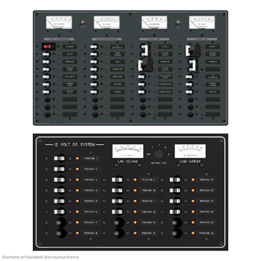
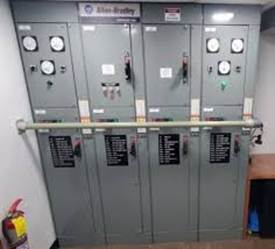
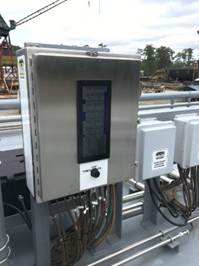
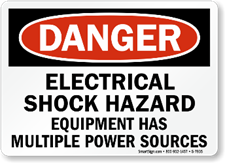
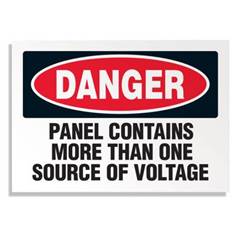
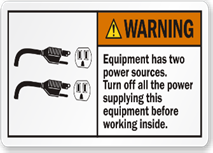
Signage requirements for electrical panels and enclosures containing multiple power sources.

Electrical Safety FAQ:

Multiple Power Source Warning Requirements

What does 46 CFR 143.250(b) require?

Federal regulations require that any electrical panel or enclosure containing more than one power source be clearly labeled with a warning sign. This sign must:

  • Alert personnel that multiple power sources exist, and
  • Identify where each power source can be secured or disconnected.

Why is this requirement important?

Electrical panels with multiple power feeds—such as shore power, generators, or battery systems—can remain energized even when one source is shut off. Proper signage prevents electrical shock, arc flash, and equipment damage by ensuring workers know all potential sources of energy before performing maintenance or service.


What should the warning label say?

While the regulation allows flexibility, the wording must be clear, visible, and specific.

Example label:

Warning: More than one power source. Disconnect shore power and generator supply before servicing.

Labels should be made of durable material, resistant to heat, moisture, and corrosion.


Where should the warning be placed?

Place the warning directly on or adjacent to the panel or enclosure in a conspicuous location, easily seen by anyone accessing the equipment.


Who is responsible for compliance?

Vessel owners, managing operators, and masters are responsible for ensuring all applicable panels and enclosures meet this labeling requirement.


How is compliance verified?

Compliance with 46 CFR 143.250(b) is verified during:

  • U.S. Coast Guard inspections
  • Authorized Class Society (ACS) surveys
  • Annual Surveys (for Subchapter M vessels)

Best practices for maintaining compliance

  • Inspect labels regularly and replace if damaged or faded.
  • Update signage whenever power configurations change.
  • Use engraved placards or marine-grade adhesive labels.
  • Train all crew and maintenance personnel on the meaning of the signs.

General Alarm Requirements – Subchapter M

General alarm requirements for towing vessels subject to Subchapter M are found in 46 CFR 143.235.  This FAQ is specific to the location of audible alarms, supplemental flashing red lights, and signage.

The regulatory text in §143.235(b)(2) requires that the general alarm must be:

“… capable of notifying persons in any accommodation, work space, and engine room”.

Additionally, §143.235(b)(2) requires:

“… in the engine room and any other area where background noise makes a general alarm hard to hear, a supplemental flashing red light…” along with the specified signage.

Audible Alarm Location

There is no regulatory requirement for the audible alarm to be installed in any specific physical location.  The requirement is that it must be audible in “any accommodation, work space, and the engine room.”

This leads to the importance of knowing what are considered accommodation and work spaces.  In short, these are spaces designed for people or areas where crew may be while on duty.  The specific Subchapter M definition of Accommodation Space and Work Space can be referenced at §136.110.

Supplemental Flashing Red Light

The supplemental flashing red light (supplemental light) must be installed:

  • In the engine room (at least one light is always required there).
  • In any other area where background noise makes a general alarm hard to hear.

Occasionally, auditors, surveyors, and vessel operators have differing opinions about which areas have background noise at a level that makes the general alarm difficult to hear.  When evaluating those other areas, if the audible alarm can be heard over any background noise, then a supplemental light is not required.

Keep in mind, ability to hear may vary, particularly if an individual has reduced hearing ability due to injury, aging, etc.  Although, each space/area must be individually evaluated by the operating company, generator rooms, steering rooms, tool rooms, shaft alley, etc. are common locations where supplemental lights are needed.

The supplemental light needs to be positioned so that it effectively alerts anyone in the area when the general alarm is activated.  Be aware that factors such as beams, bulkheads, insulation, dull paint and obstructions can reduce the light’s visibility.

Signage Requirements

Finally, be sure to post a sign at each supplemental light identifying its purpose. The required wording is:

“Attention General Alarm – When Alarm Sounds or Flashes Go to Your Station.”